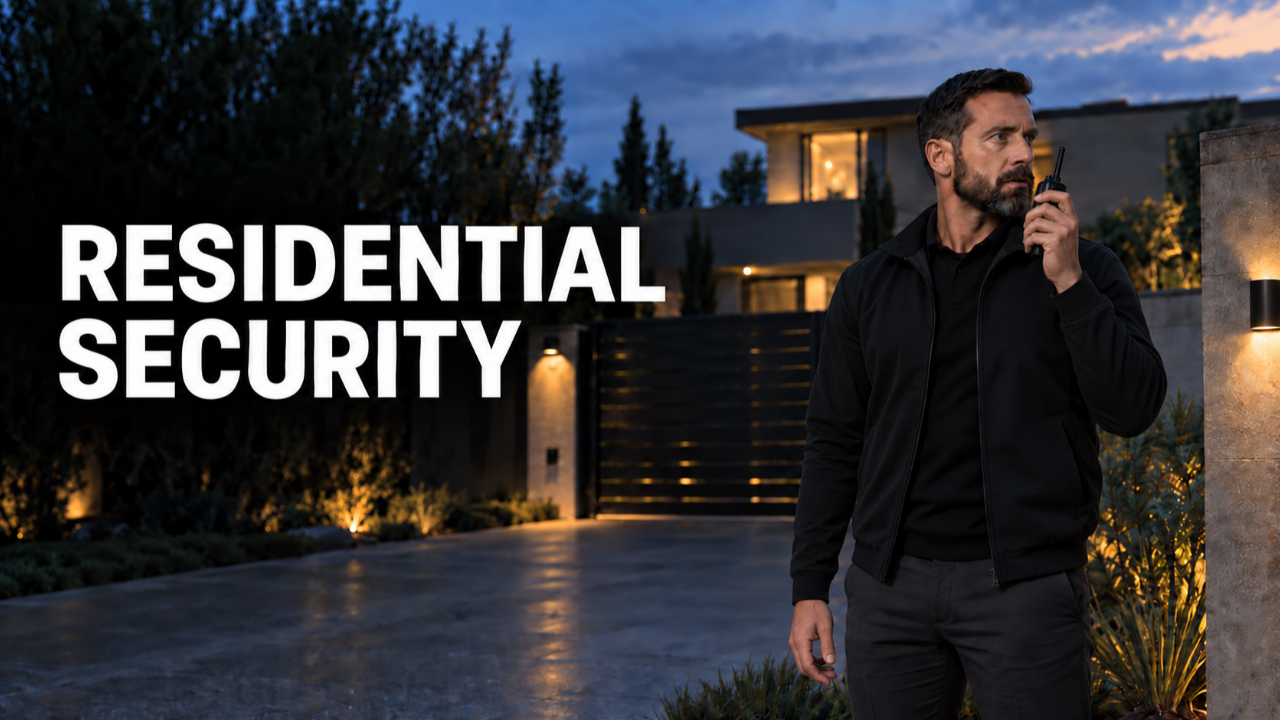
Residential Security:
Core Concepts &
Operating Standards
Residential security requires more than guarding a property. Professionals must protect people, assets, privacy, and household operations while maintaining a discreet presence that supports normal daily life.
This course introduces the core concepts and operating standards used in professional residential security. Students will learn how layered protection works, how residential security connects with the wider executive protection program, and how personnel should manage routine activities without creating unnecessary disruption.
The course covers access control, visitors and vendors, deliveries, suspicious packages, reporting, professional attire, public interaction, shift changes, equipment handovers, unauthorized access, emergency response, information control, and quality assurance.
Students will also receive an introduction to use-of-force decision-making based on legal authority, necessity, proportionality, training, and employer policy. This section provides general awareness and does not replace jurisdiction-specific instruction or licensing requirements.
By the end of the course, students will understand how to:
• Explain the purpose and core functions of residential security
• Apply layered protection within a residential environment
• Follow essential residential security procedures
• Communicate and document activity professionally
• Manage visitors, vendors, packages, and household movements
• Complete an effective shift handover
• Respond appropriately to incidents and emergencies
• Protect sensitive information
• Support ongoing inspection and improvement of the security program
This course is designed for residential security professionals, executive protection agents, security supervisors, and anyone preparing to work within a residential protection program.